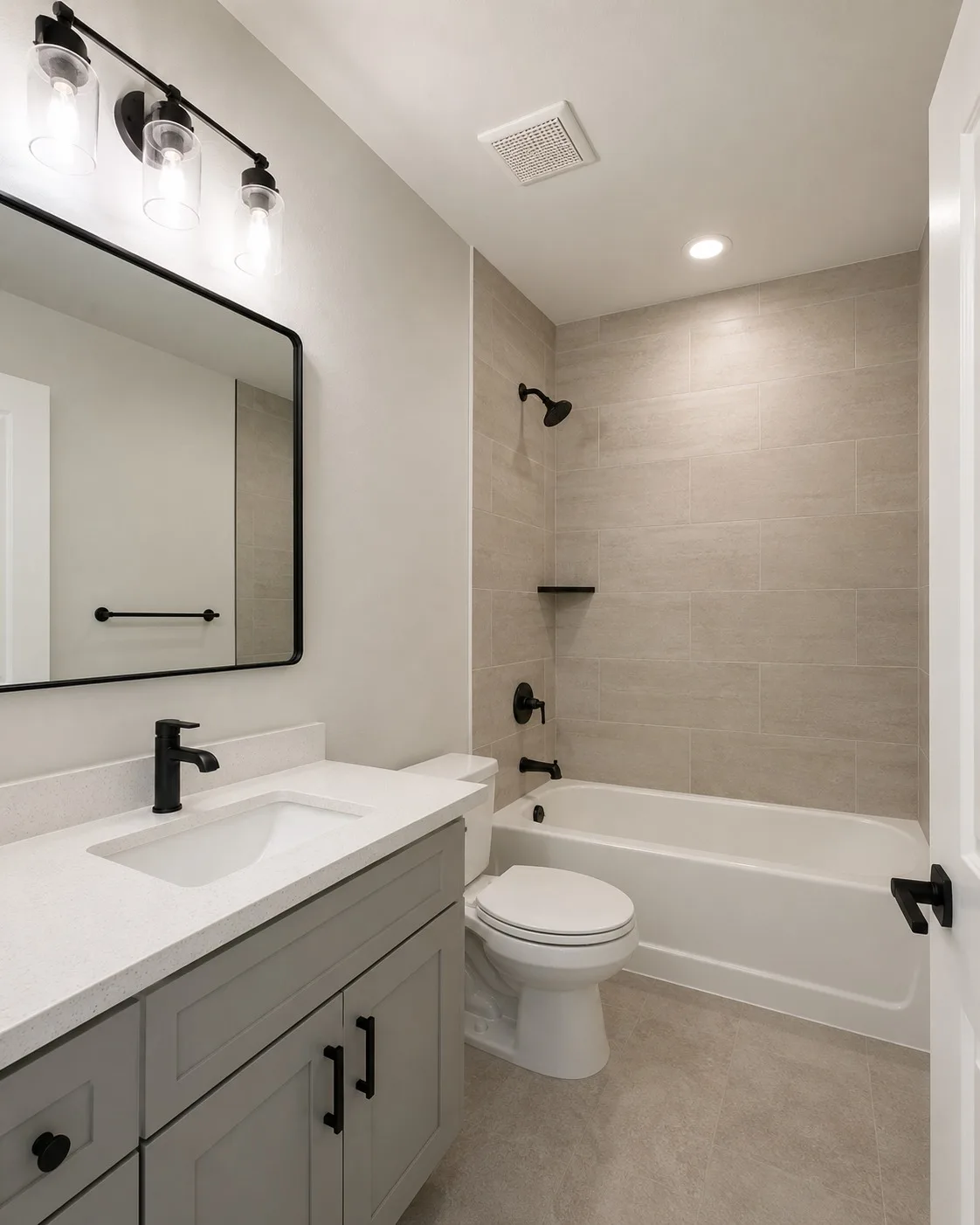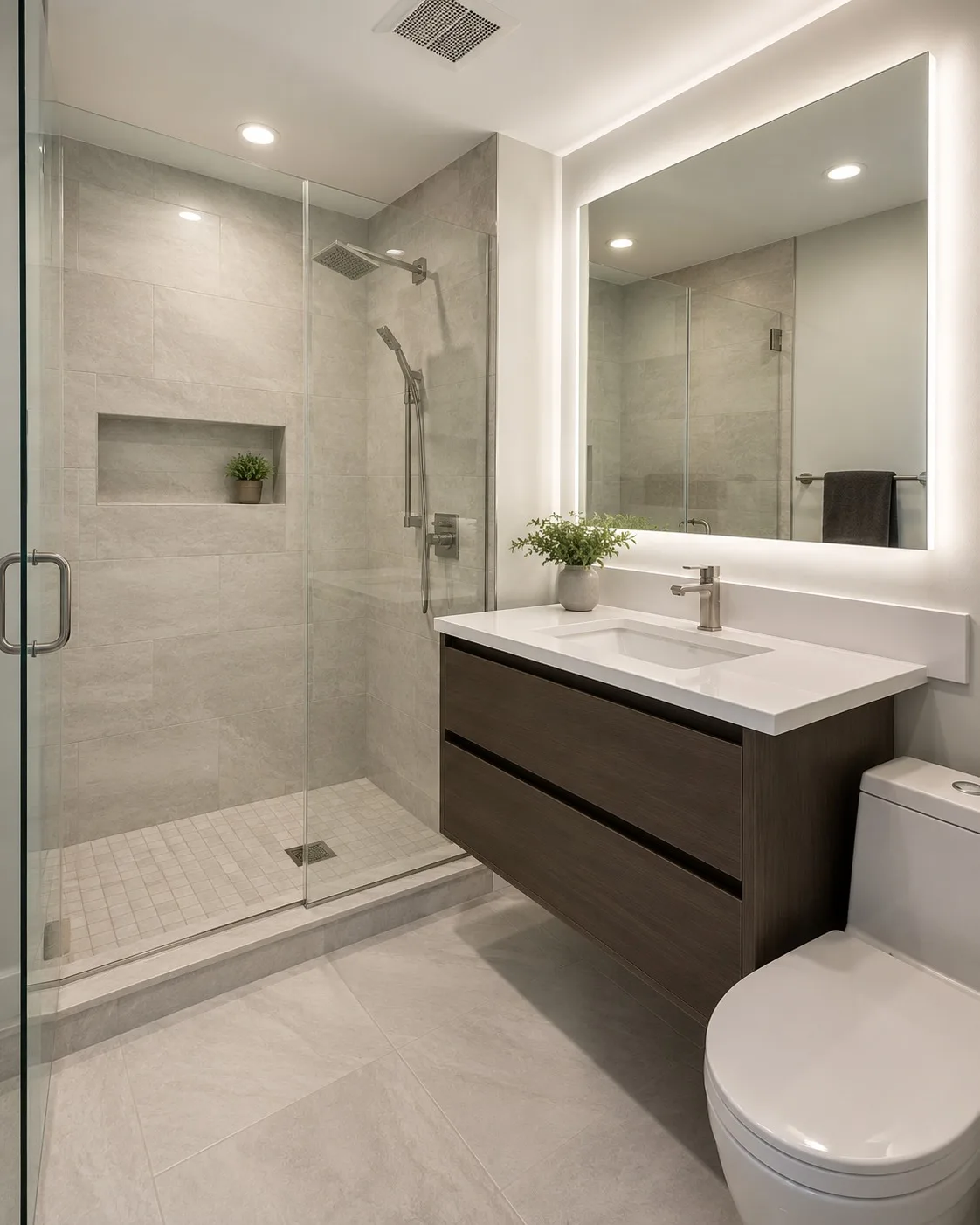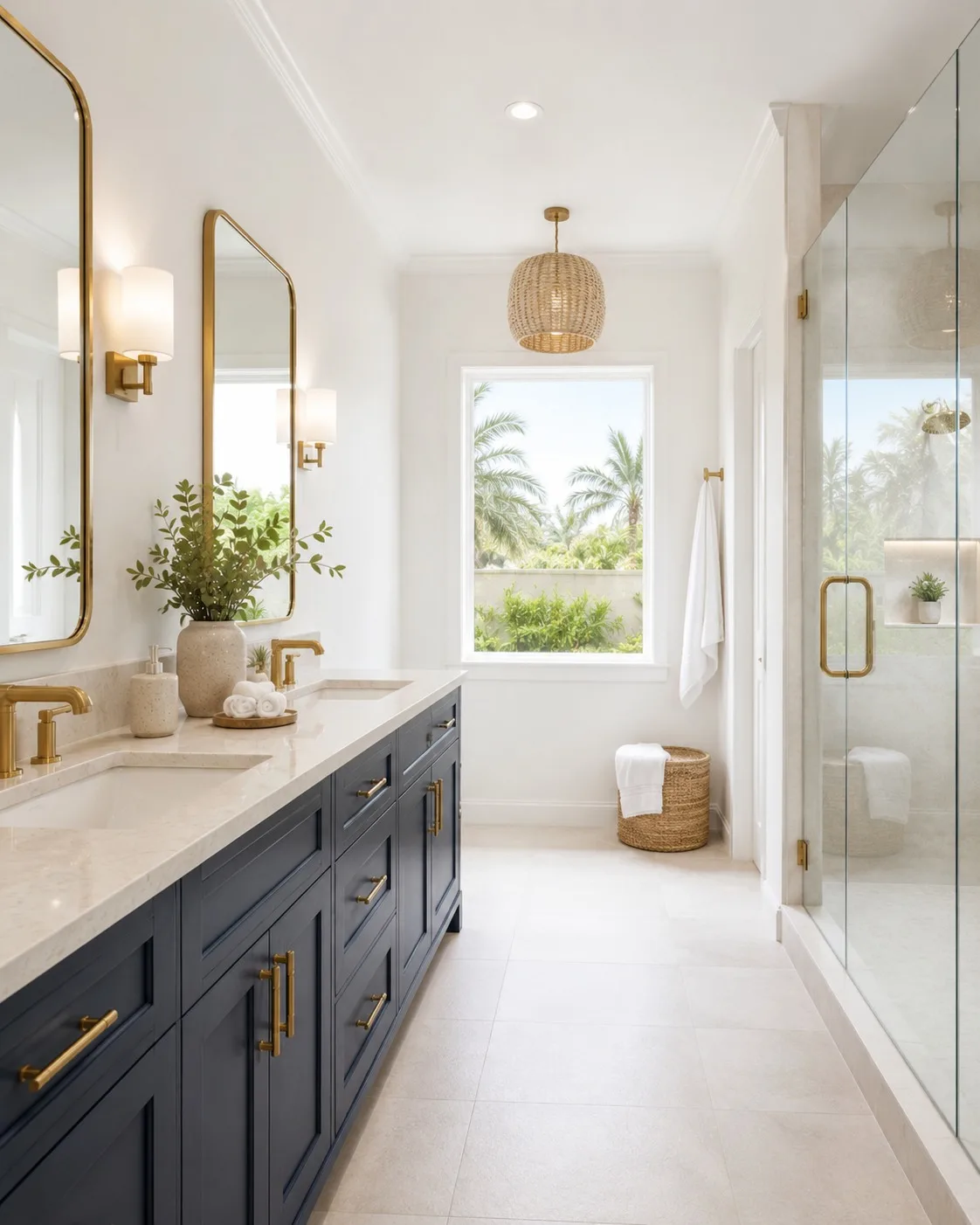
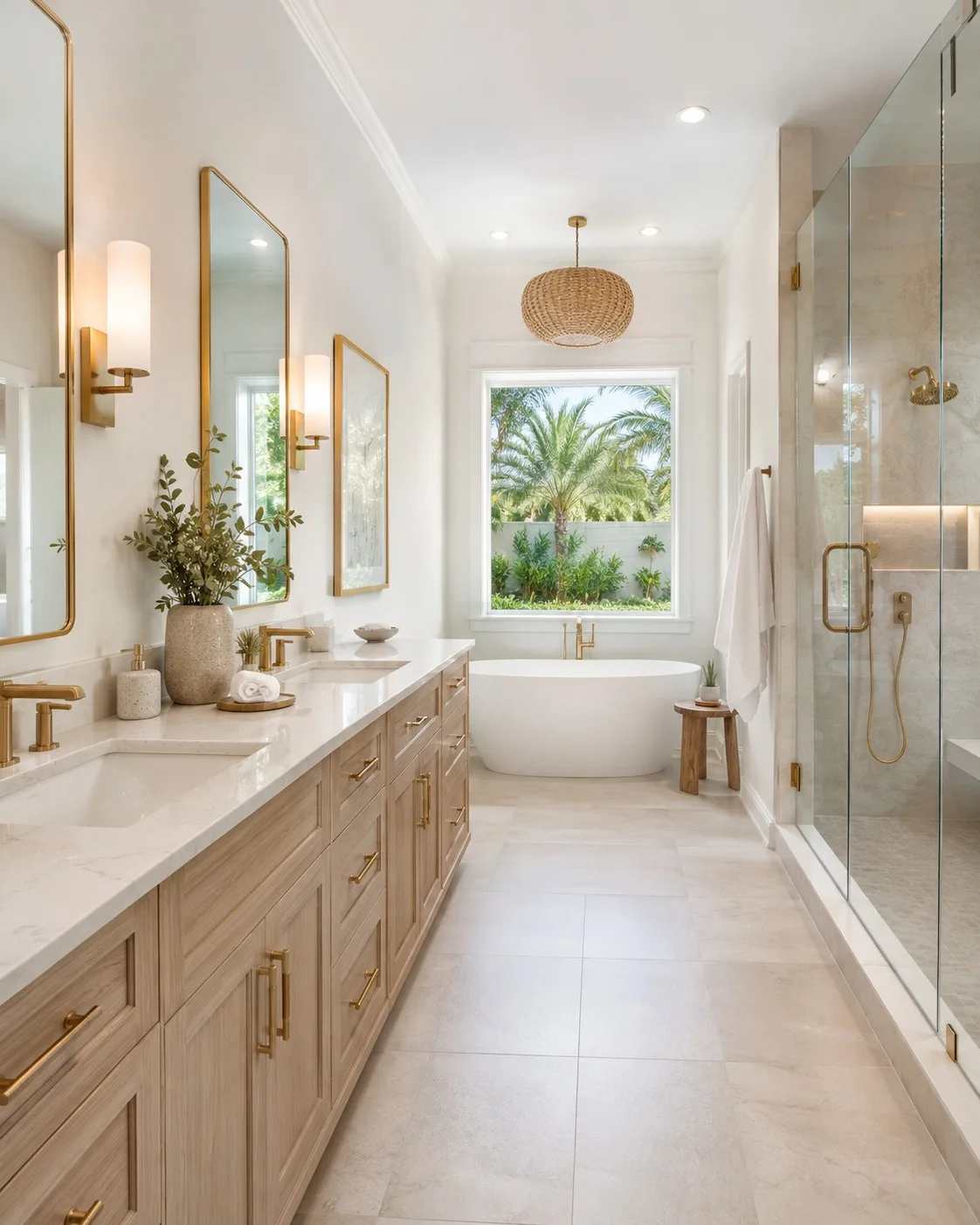
Florida averages 60 to 90 percent relative humidity year-round. Bathrooms in Central Florida experience extreme temperature cycling when air conditioning runs hard in summer and is reduced in cooler months. This thermal movement, combined with constant moisture, is the enemy of grout lines and the friend of mold. Choosing the right tile material and installation method is the difference between a bathroom that looks great for 20 years and one that needs redoing in 5.
Tile Materials Ranked for Florida Bathrooms
| Material | Florida Rating | Water Absorption | Notes |
|---|---|---|---|
| Porcelain (rectified) | Excellent | <0.5% | Best overall choice for FL. Dense, frost-proof, low absorption. |
| Large-format porcelain (24x24+) | Excellent | <0.5% | Fewer grout lines = less mold risk. Installation skill required. |
| Glass tile | Excellent | 0% | Zero absorption. Great for wet areas and accents. |
| Ceramic | Good | 3-7% | Fine for walls in low-wet areas. Not for shower floors. |
| Natural stone (sealed) | Fair | Varies | Requires sealing every 12-24 months. High maintenance in FL. |
| Travertine (filled/sealed) | Fair | 3-8% | Beautiful but requires diligent maintenance in humid climates. |
| Marble (honed) | Poor for showers | Variable | Etches from pH water, stains in humid environments. |
| Saltillo/Mexican tile | Poor | High | Highly porous, not suitable for Florida wet areas. |
Why Large-Format Tile Wins in Florida
The single biggest predictor of bathroom tile failure in Florida is the grout-to-tile ratio. The more grout lines, the more places for mold to colonize. A 4x4 inch tile installation has roughly 10 times more grout line linear footage than a 24x24 large-format installation covering the same area. In a high-humidity environment, this matters enormously.
- 24x24 or larger tiles: Minimum grout lines, maximum surface coverage, easiest to clean.
- Rectified tiles: Machine-cut to exact dimensions. Allows for minimal 1/16 inch grout joints.
- Epoxy grout: Waterproof, stain-resistant, non-porous. Costs 2x to 3x more than cement grout but outlasts it by 3x in wet Florida conditions.
- Schluter strips at transitions: Prevent cracking at height changes and perimeter edges caused by thermal expansion.
Shower Floor: What to Use
The shower floor has unique requirements beyond wall tile. It must have adequate pitch (1/4 inch per foot toward the drain), be slip-resistant, and handle daily water exposure. In Florida, the go-to materials in 2026 are 2x2 mosaic porcelain, 4x4 porcelain with slip-resistant texture, or large-format tile with a linear drain (which allows larger tiles to meet code without the complex pitch pattern of a center drain).
Avoid natural stone on Florida shower floors unless you are committed to sealing every 12 months and using a non-acidic cleaner. Florida's hard water leaves mineral deposits that interact with stone sealers. Most homeowners are not aware of this until the discoloration begins.
Grout Selection: Epoxy vs Cement
| Grout Type | Cost per sq ft (installed) | Lifespan in FL | Mold Resistance |
|---|---|---|---|
| Standard cement grout | $1 - $2 | 3-7 years before discoloring | Poor — porous, absorbs moisture |
| Polymer-modified cement grout | $1.50 - $2.50 | 5-10 years | Fair — better than standard |
| Epoxy grout | $3 - $5 | 15-25 years | Excellent — non-porous, waterproof |
GNX Development uses epoxy grout as the standard in all shower applications throughout Florida. The upfront cost difference pays for itself within 3 to 4 years in cleaning time alone, before considering the avoided regrout cost.