Orlando averages 54 inches of rain per year and relative humidity that rarely drops below 60 percent, even indoors with air conditioning running. These conditions destroy certain flooring types in 3 to 7 years and are irrelevant to others. Choosing the wrong flooring in Central Florida is not just an aesthetic mistake, it is a financial one. Here is the definitive breakdown for 2026.
Florida Flooring Ranked: Best to Worst for Humidity
| Flooring Type | Florida Rating | Humidity Resistance | Avg. Cost Installed (Orlando) |
|---|---|---|---|
| Porcelain tile | Excellent | 100% — no organic material | $6 - $14/sq ft |
| Luxury Vinyl Plank (SPC rigid core) | Excellent | 100% waterproof core | $4 - $9/sq ft |
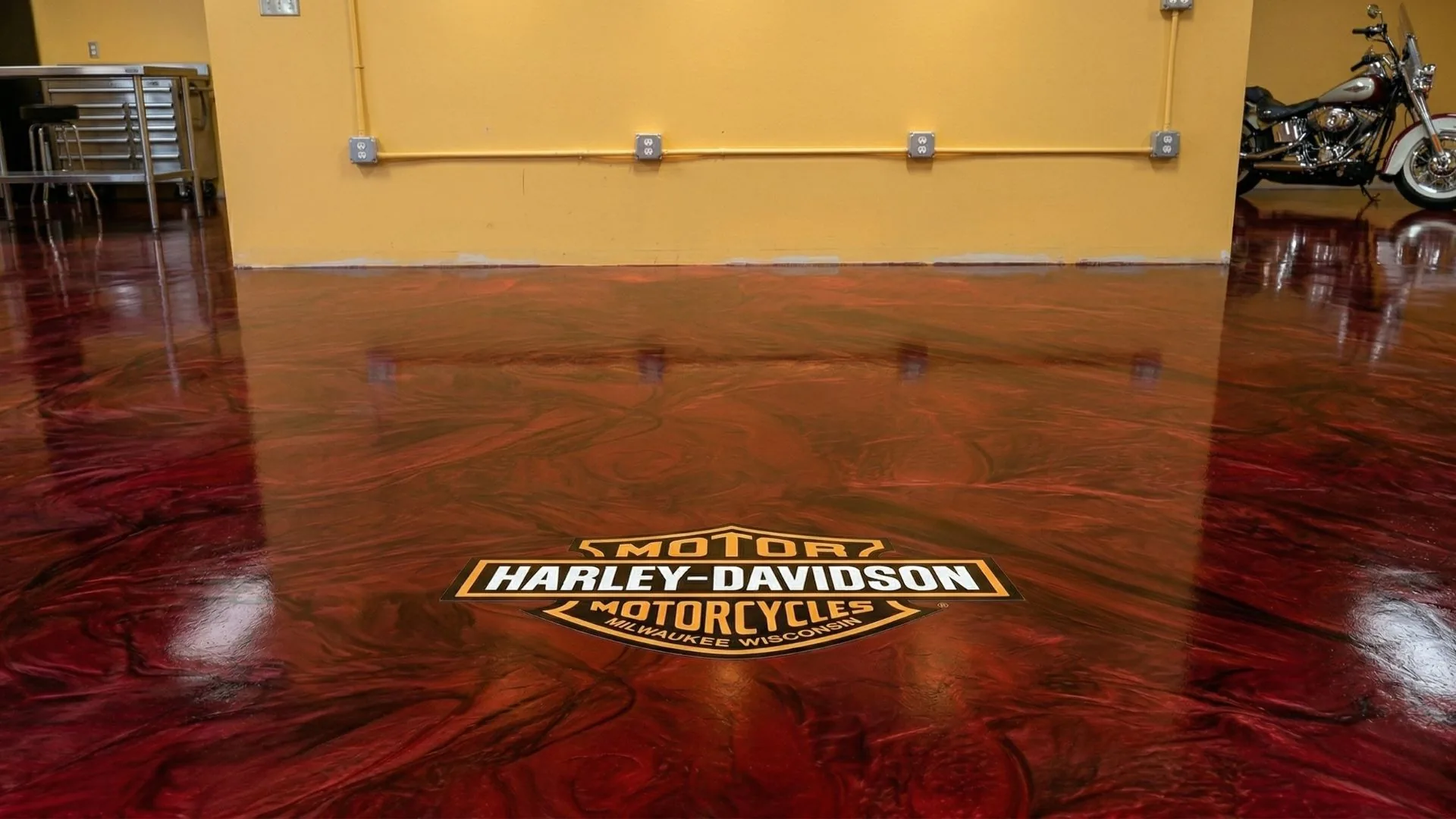
| Epoxy (residential) | Excellent | Seamless, zero moisture path | $3 - $7/sq ft |
| Engineered hardwood | Good | Better than solid, still expands | $7 - $15/sq ft |
| Laminate | Fair | Swells when wet, avoid wet areas | $3 - $7/sq ft |
| Solid hardwood | Poor | Cups, buckles, molds in FL | $9 - $18/sq ft |
| Carpet | Poor in wet areas | Traps humidity and allergens | $3 - $7/sq ft |
| Saltillo / Mexican tile | Poor | Porous, absorbs moisture | $5 - $10/sq ft |
LVP: The Most Popular Choice in Orlando in 2026
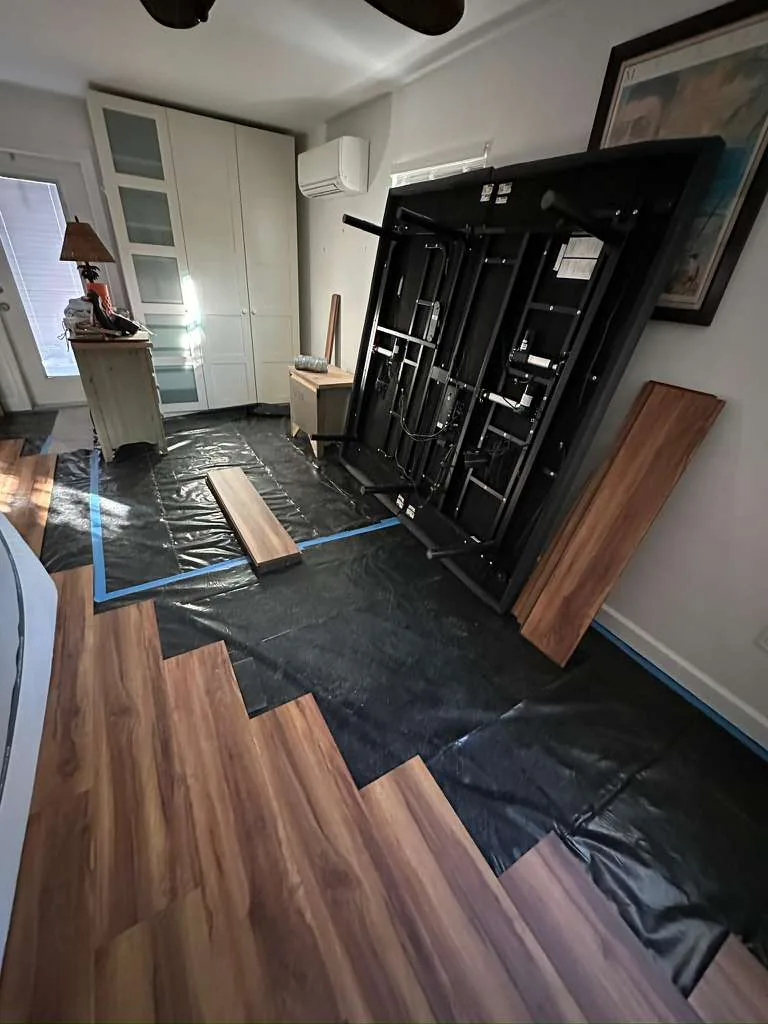
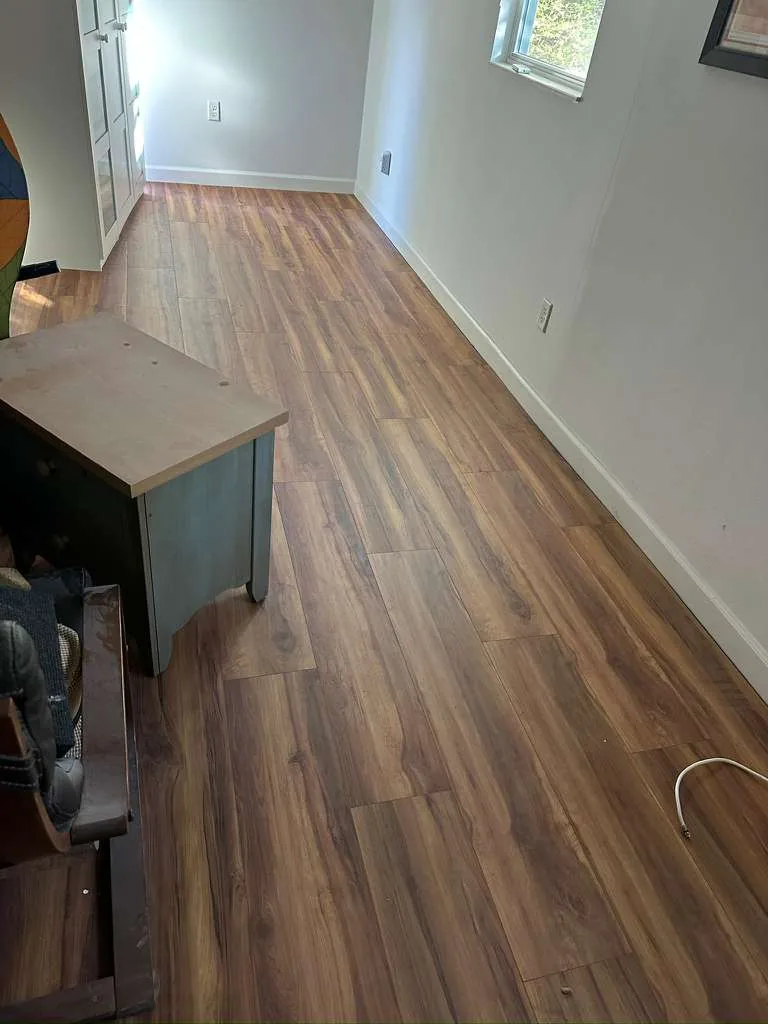
Luxury Vinyl Plank with a rigid SPC (Stone Plastic Composite) core is the most-installed flooring in Central Florida residential projects in 2026. The reasons are straightforward: 100 percent waterproof core, no swelling or buckling under Orlando's humidity, softer and warmer underfoot than tile, easier installation than tile, and a price point that works for whole-house flooring projects. The key specification to look for is a wear layer of at least 12 mil for residential use, and 20 mil or above for high-traffic areas.
- SPC core: Rigid stone-plastic composite. Does not flex with subfloor imperfections. Best for Florida slabs.
- WPC core: Wood-plastic composite. Softer underfoot but slightly less rigid than SPC. Works well in bedrooms and living areas.
- Wear layer: 12 mil for standard residential. 20 mil for kitchens and high traffic. 28+ mil for commercial.
- Trending colors in Orlando 2026: warm honey oak, light greige, whitewashed pine, natural walnut.
- Plank size trend: 7-9 inch wide planks up to 72 inches long. Fewer seams, more seamless look.
Porcelain Tile: The Florida Classic
Porcelain tile is the undisputed humidity champion. Zero moisture absorption, no swelling, no mold, and a lifespan measured in decades, not years. In 2026, the trend in Orlando is large-format porcelain (24x24 or 24x48 inch slabs) in wood-look, concrete-look, or natural stone finishes. These eliminate the grout-line problem of small tiles while delivering the durability of porcelain.
The biggest weakness of tile in Florida is not the material itself but the installation. Tile installed over a cracked or unlevel slab without proper decoupling membrane will crack within 2-5 years as the slab moves. Florida slabs move. Always ask your contractor how they handle subfloor preparation.
Why Solid Hardwood Fails in Florida
Solid hardwood flooring is dimensionally unstable in Florida. Wood absorbs and releases moisture from the air. In a Central Florida home, the indoor humidity swings between 45 percent in winter (with AC running heavily) and 70 percent in summer (when AC struggles to keep up). This constant movement causes cupping (edges rising), crowning (center rising), and eventually cracking. Gaps open in dry periods and floors buckle in humid ones.
- Cupping: Edges of planks rise higher than the center. Caused by moisture hitting the underside of the plank.
- Crowning: Center of plank rises above edges. Typically happens after cupped floors are sanded too soon.
- Gapping: Visible gaps between planks during dry AC season.
- Buckling: Entire planks lift off the subfloor. Happens when wood expands and has nowhere to go.
Engineered Hardwood: A Viable Compromise
Engineered hardwood has a real wood veneer (0.6mm to 6mm thick) bonded to a plywood or HDF core in cross-ply layers. The cross-ply construction dramatically reduces dimensional movement compared to solid hardwood. In Florida, engineered hardwood is viable if installed with proper acclimation (7-10 days in the home), a vapor barrier, and in rooms that maintain consistent climate control. It is not recommended for Florida rooms, laundry rooms, or any space adjacent to an exterior door.
GNX Development installs all major flooring types across Central Florida: LVP, porcelain tile, engineered hardwood, and decorative epoxy. Licensed GC #CBC1269497. Free in-home consultation and written quote. Serving Orlando, Winter Park, Lake Nona, Windermere, Kissimmee, and surrounding areas.