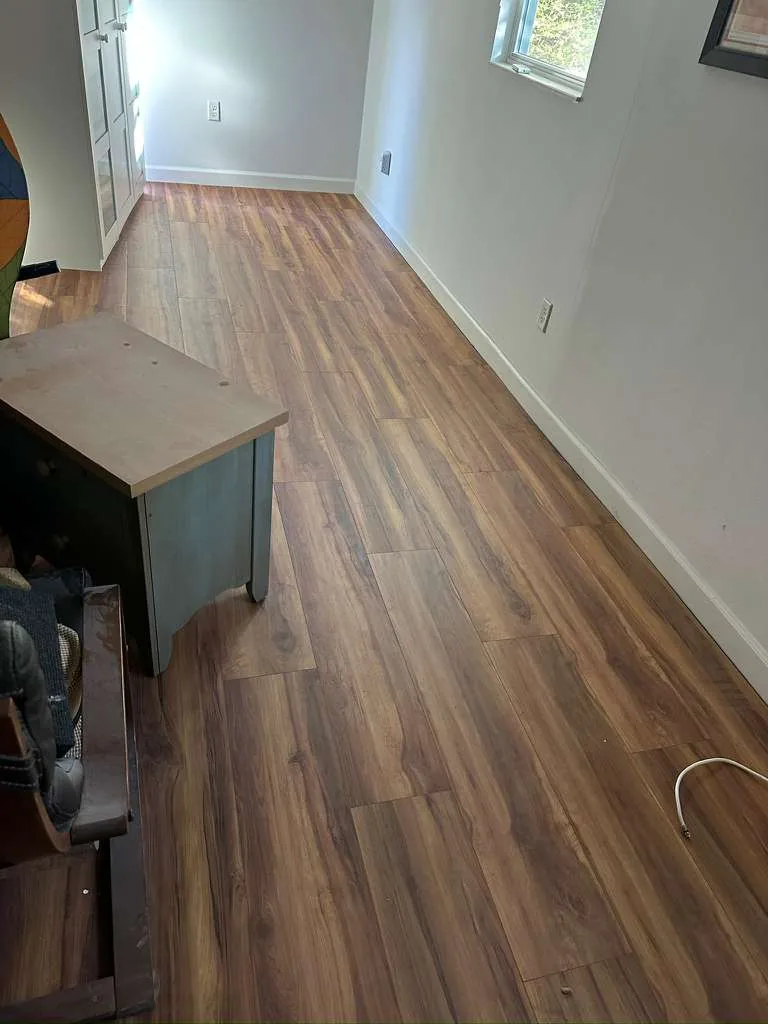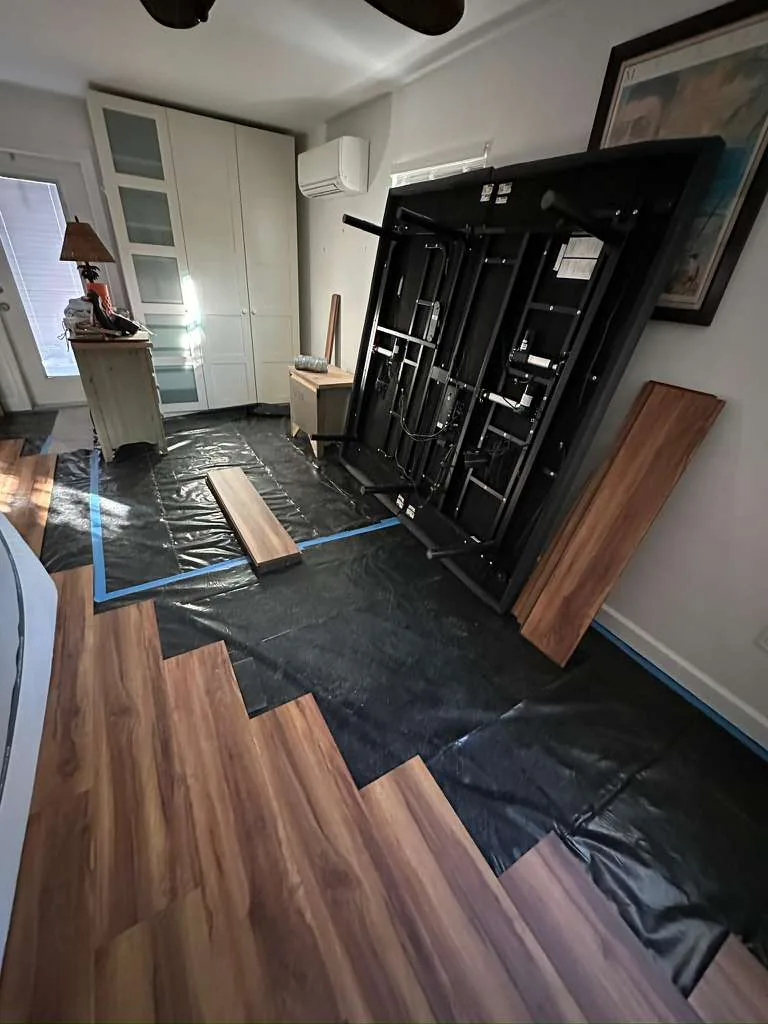
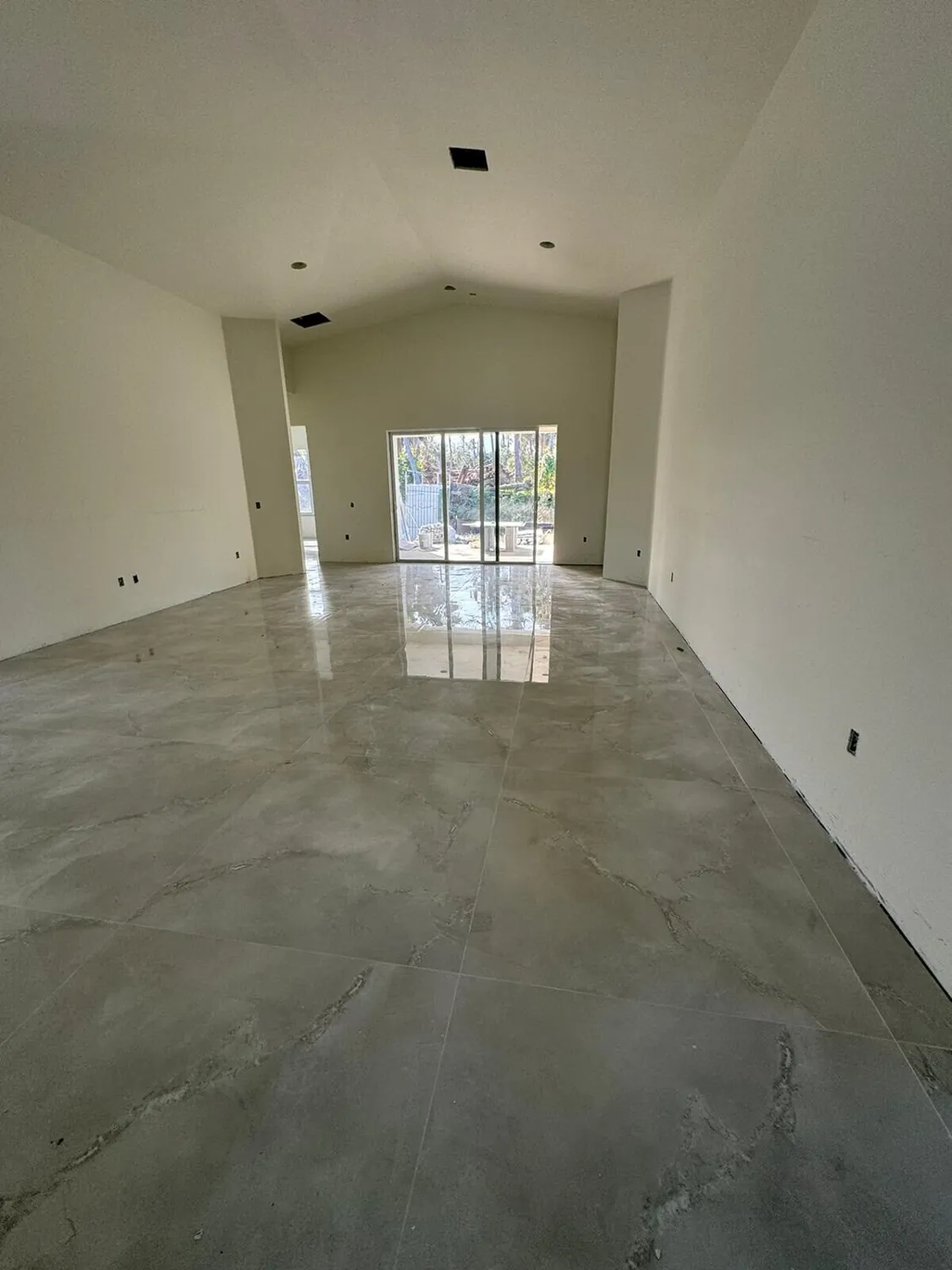
Lift the flooring in almost any Central Florida house built in the last several decades and you will find concrete. A slab is a good foundation and a demanding surface to put a floor on. It holds moisture, it is rarely as flat as it looks, and it cracks. Each floor type reacts differently to those three things, and most flooring failures in Florida trace back to one of them.
Concrete Is Never Completely Dry
Concrete is porous. A slab sitting on Florida ground draws moisture from below and releases it upward as vapor, more so when the vapor barrier under the slab is old, damaged or was never installed. You cannot see or feel this. A slab that looks and feels dry can still be releasing enough moisture to ruin a wood floor or break down an adhesive.
How Moisture Is Tested
There are two standard tests. One places sensors in small holes drilled into the slab to read the relative humidity inside the concrete. The other seals a dish of calcium chloride to the surface to measure how much vapor the slab gives off over a few days. Flooring and adhesive manufacturers state which test they accept and the maximum reading their product allows. A handheld meter pressed against the surface is a quick screening tool and not a substitute for either test when wood or glue is involved.
What Moisture Does to Each Floor
| Floor type | What slab moisture does | Usual protection |
|---|---|---|
| Solid hardwood | Cupping, swelling, gaps | Generally not installed directly on slab |
| Engineered hardwood | Cupping or adhesive failure if high | Moisture test, moisture-control adhesive or barrier |
| Luxury vinyl plank | Plank is waterproof, but moisture trapped below can cause odor or mold | Vapor barrier where the product calls for it |
| Glue-down vinyl | Adhesive softens and releases | Moisture test, rated adhesive |
| Porcelain tile | Largely unaffected | Proper mortar and crack isolation |
Flat Is Not the Same as Level
A floor can slope gently toward a doorway and still be fine. What matters to flooring is flatness: the absence of dips and humps. Manufacturers publish a tolerance, commonly around 3/16 of an inch over a 10 foot span, and tighter for large tile. Outside that tolerance, floating floors flex at the joints, glued floors lose contact and large tiles end up with edges at different heights. An installer checks this with a long straightedge or a laser across the room, not by eye.
How a Slab Is Corrected
- Scraping: old adhesive, paint and drywall mud are removed so new materials bond.
- Grinding: high spots and ridges are taken down.
- Patching: nail holes from tack strips and small voids are filled.
- Self-leveling compound: poured over low areas to bring them up to plane, then left to cure.
- Crack treatment: hairline cracks are normal; under tile they are covered with a crack isolation membrane so they do not travel into the tile.
Signs the Slab Was Skipped
- Planks that click, bounce or sound hollow in certain spots
- Seams that open up or peak a few months after installation
- Wood boards with raised edges
- Tile with one edge higher than its neighbor, or cracks that run in a line across several tiles
- A musty smell from a floating floor
What to Ask Before You Hire
- How will you check the slab for moisture, and which test does this product require?
- How will you check flatness, and what tolerance does the manufacturer give?
- Is leveling included in the price, and what happens if more is needed?
- Does this product need a vapor barrier or a specific adhesive on a slab?
- How long does leveling compound cure before you install over it?
Slab preparation adds time and cost to a quote, and it is the first thing a low bid leaves out. It is also the part of the job that cannot be fixed later without taking the floor back up.
GNX Construction checks moisture and flatness before installing hardwood, luxury vinyl plank or tile, and prices the slab preparation in writing before work begins. Licensed Florida building contractor #CBC1269497, serving Orlando and Central Florida. Request a free in-home estimate.