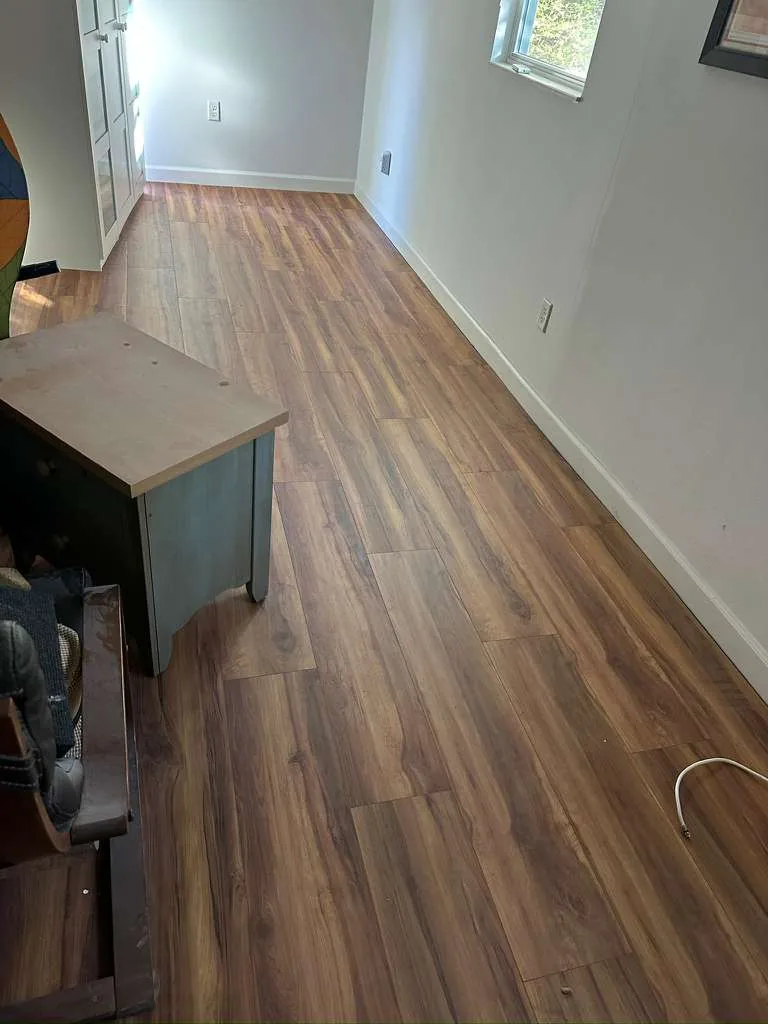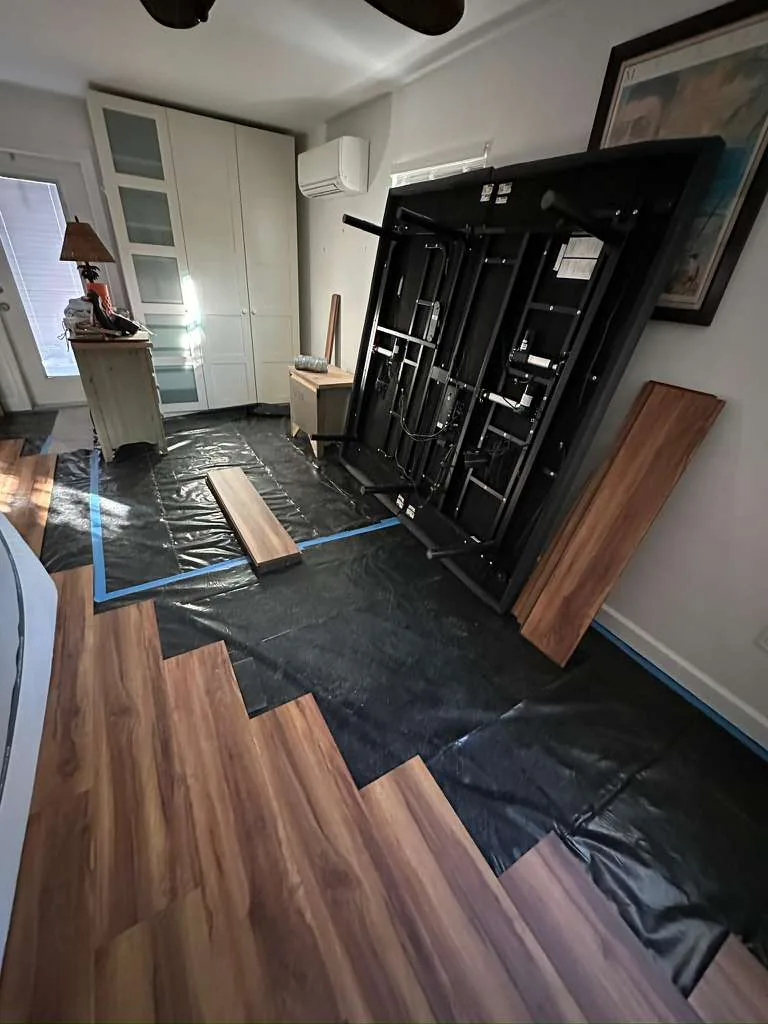

Most flooring problems are not product problems. The plank was fine. What failed was the part nobody photographed: a slab that was never tested for moisture, a low spot that was never leveled, a quote that did not include removing the old floor. Choosing the right contractor is mostly about finding out, before you sign, how each company handles the work you will never see.
1. Look Up the License Yourself
In Florida, flooring installation on its own is generally not a state-licensed trade, which means almost anyone can advertise as a flooring installer. A contractor who does hold a state license is easy to verify: search the name or license number on the Florida DBPR site, myfloridalicense.com, and confirm the license is active and belongs to the company you are talking to. A license does not guarantee good work, but it gives you a real business, a real qualifier and a regulator to complain to if things go wrong.
2. Ask for the Certificate of Insurance
Ask for a certificate of insurance showing general liability, and ask how workers on your job are covered. If an uninsured installer damages a water line or gets hurt in your home, the problem can land on you. A legitimate contractor sends the certificate without argument, usually the same day.
3. Get the Scope in Writing, Line by Line
A one-line quote such as "install LVP, 1,200 sq ft" tells you nothing. A useful estimate separates material from labor and lists each task. When two quotes are far apart, put them side by side and look for what the cheaper one does not mention.
- Removal and disposal of the existing floor, including carpet pad and tack strips
- Subfloor or slab preparation: patching, grinding, leveling
- Moisture testing, and a moisture barrier if the product needs one
- Underlayment, if required
- Baseboards or quarter round: reuse, replace, or not included
- Transitions between rooms and at exterior doors
- Moving furniture and appliances
- Door trimming if the new floor is thicker
4. Ask How They Check the Subfloor
Flooring manufacturers publish a flatness tolerance for the surface under their product, commonly around 3/16 of an inch over 10 feet. If the slab or subfloor is outside that, floating floors flex and click, glued floors release and tile cracks. Ask the estimator how they measure flatness and what happens if the floor is out. "We will see when we get there" is not an answer.
5. Ask About Moisture, Especially on a Slab
Most Orlando homes sit on a concrete slab, and concrete holds and passes moisture. Wood and many adhesives fail when that moisture is too high. A careful installer tests the slab before installing hardwood or a glue-down floor and can tell you which test they use and what reading the product allows.
6. Find Out Who Is Actually Doing the Work
Some companies sell the job and hand it to whichever subcontractor is free that week. That is not automatically bad, but you should know. Ask who will be in your home, whether the person who measured will see the job through, and who you call if something is wrong on day two.
7. Look at Finished Work That Matches Yours
Ask for photos of completed jobs in the same material you are buying. Look at the details: transitions at doorways, cuts around door casings and cabinets, the line where the floor meets the baseboard. Those are the places where skill shows.
8. Read Reviews for Specifics
Star ratings matter less than what the reviews describe. Look for mentions of showing up on schedule, communication, cleanup and how problems were handled. Check that the reviews belong to the same company, at the same address, that is quoting you. Similar business names are common.
9. Understand the Schedule and the Payment Terms
You should have a start date, an expected duration and a payment schedule in writing. A deposit to order material is normal. Paying the full amount before work begins is not. The final payment should come after a walkthrough with you.
A Short Script for the Estimate Visit
- What is your license number, and can I look it up?
- Can you email me your certificate of insurance?
- Is removal and disposal of the old floor included?
- How will you check the slab or subfloor for moisture and flatness?
- What happens to the price if the subfloor needs work?
- Are baseboards and transitions included?
- Who will be on site, and who is my contact?
- When do you start and how long will it take?
GNX Construction is a Florida Certified Building Contractor, license #CBC1269497, based in downtown Orlando. We measure, check the subfloor and give you a written estimate with material and labor itemized before any work starts. Request a free in-home flooring estimate.